To add clear calls to action in your emails, make your buttons or links stand out with compelling language and eye-catching design. Keep your instructions simple and direct, so recipients know exactly what step to take next. Position your CTA prominently within your message and create a sense of urgency to motivate immediate response.
Including well-designed, concise, and action-oriented prompts ensures your audience understands what to do and feels encouraged to act. Clear, strategic placement paired with persuasive copy is key to driving engagement and achieving your email goals.
Capturing your reader’s attention quickly is crucial. Start your email with a relatable or intriguing hook, then immediately provide a straightforward solution: crafting visually appealing, easy-to-understand calls to action that guide your audience effortlessly toward your desired outcome. Mastering this simple yet powerful element can significantly improve your email marketing results.

How to add clear calls to action in your emails
Including clear calls to action (CTAs) in your emails guides your readers toward the next step you want them to take. Properly crafted CTAs can increase engagement, boost conversions, and help you achieve your email marketing goals. Let’s explore how to make your CTAs stand out and guide your audience effectively.
Understand the purpose of your CTA
Before designing your CTA, identify what you want your recipients to do. Do you want them to buy a product, sign up for a webinar, or read a blog post? Clarifying your goal helps you craft a focused and compelling message. A clear purpose keeps your CTA direct and effective.
Use action-oriented language
Start your CTA with strong verbs that tell readers exactly what to do. Words like Buy, Register, Download, or Learn encourage immediate action. Keep the language simple, bright, and straightforward to motivate click-throughs.
Make your CTA visually prominent
Use contrasting colors for your button or link to catch the eye. Bright colors like orange, green, or blue often work well. Ensure the CTA stands out from the rest of your email content without overwhelming it. Clear visual cues push readers toward clicking.
Keep your CTA concise and focused
A short, precise message works best. Instead of a lengthy phrase, use just a few words that clearly state the action. For example, Get Your Discount or Subscribe Now. This clarity helps prevent confusion and encourages quick responses.
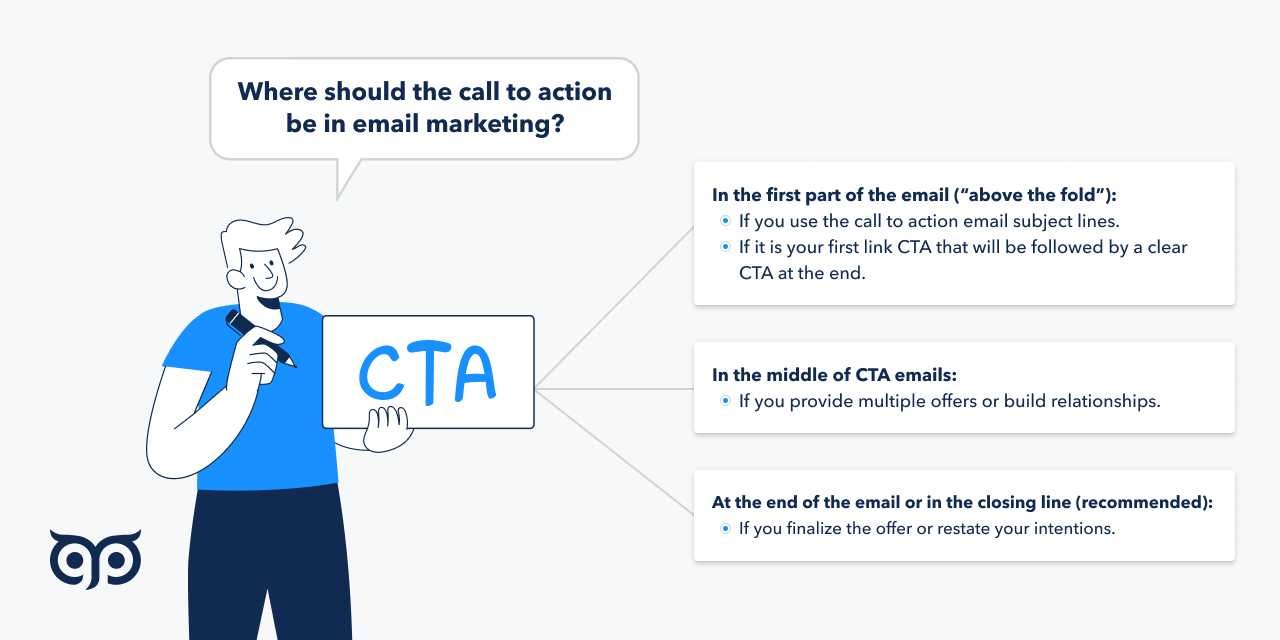
Place your CTA strategically within the email
Position your CTA where it naturally fits in the flow of your message. Common placements include after a compelling explanation or benefit statement. Consider repeating your CTA if your email is long, placing it both near the top and at the end.
Utilize multiple CTAs if necessary
If your email covers different topics, include distinct CTAs for each. Make sure each CTA is relevant and clear, so readers don’t get overwhelmed. For example, offer a primary CTA for the main goal and secondary CTAs for related actions.
Use persuasive and benefit-driven language
Highlight the advantage of taking action. Instead of saying Click here, try Get Instant Access or Save Your Spot. Emphasize what the reader gains to increase motivation.
Test different CTA elements
Experiment with various words, colors, and placements to see what performs best. Use A/B testing to compare different versions. Analyzing results helps refine your approach and improve your email marketing effectiveness.
Optimize for mobile devices
Make sure your CTA buttons are large enough and easy to tap on smartphones and tablets. Responsive design ensures the CTA remains clear and clickable across all devices. A mobile-friendly CTA reduces missed opportunities.
Include urgency and scarcity where appropriate
Adding a sense of urgency encourages immediate action. Phrases like Limited Time Offer or Only a Few Spots Left motivate readers to act quickly. Be honest and avoid overdoing this to maintain trust.
Analyze CTA performance regularly
Track click-through rates, conversions, and other metrics to evaluate your CTAs. Use tools like Google Analytics or your email platform’s reports. Continuous analysis helps you improve your CTA strategies over time.
Enhance your CTA with testimonials, reviews, or trust badges. Showing that others have benefited from your offer can increase credibility and persuade readers to take action. For example, include a quote from a satisfied customer near your CTA.
Balance your CTA with valuable content
Ensure your email offers useful information or engaging storytelling before prompting action. A well-balanced email feels less pushy and more helpful, making readers more inclined to follow your CTA.
Leverage personalization to boost CTA effectiveness
Use the recipient’s name or previous interactions to craft tailored CTAs. Personalized messages feel more relevant and increase the likelihood of engagement. For instance, John, your exclusive offer awaits.
Incorporate multimedia elements
Using images, icons, or GIFs can draw attention to your CTA. Visual elements complement the message and make your call to action stand out. Just ensure they do not distract or slow down your email loading time.
Use clear and simple layout design
Arrange your email so that the CTA is easy to find. Use white space strategically around buttons or links. Avoid clutter and keep the focus on the CTA to prevent readers from missing it.
Offer options for readers to share your content with others. Adding sharing buttons near your CTA can extend your reach and amplify your message. When appropriate, motivate sharing to increase brand awareness.
Summarize key points
Remember to test different elements, keep your language action-driven, and position your CTA thoughtfully. Consistent analysis and optimization lead to better results. Always aim to make the call to action clear, compelling, and easy to act upon.
Create Engaging Emails with Clear Calls-to-Action!
Frequently Asked Questions
What are the key elements to include in a clear call to action in emails?
A clear call to action should be concise, specific, and visually distinct. Use action verbs that tell recipients exactly what to do, such as “Download Now” or “Register Today.” Incorporate a button or highlighted link that stands out from the rest of the email content. Additionally, make sure the CTA directs to a relevant landing page and clearly communicates the benefit for the recipient.
How can placement of the call to action influence its effectiveness?
Position your call to action where readers naturally look after engaging with your content, typically towards the end of the email or after a compelling message. Placing it above the fold ensures visibility without scrolling. Use visual cues like whitespace or contrasting colors to draw attention, guiding readers smoothly toward the action you want them to take.
What design techniques help make calls to action more noticeable?
Design techniques such as using bold colors that contrast with the email’s background, adding buttons with clear borders, and using whitespace around the CTA can make it stand out. Keep the button size adequate for easy clicking on mobile devices. Incorporating arrows or other visual indicators can also direct attention and encourage interaction.
How can personalization improve the clarity and effectiveness of calls to action?
Personalizing your calls to action based on recipient data increases relevance and engagement. Use the recipient’s name or reference specific preferences to tailor the message. For example, a personalized CTA like “Download Your Custom Report” resonates more than a generic message, making the recipient more likely to respond.
What role does testing play in optimizing calls to action in emails?
Testing different versions of your calls to action allows you to see which wording, design, or placement resonates best with your audience. Conduct A/B tests to compare different approaches, analyze open and click-through rates, and refine your strategies accordingly. Continuous testing helps improve response rates and overall email performance.
Final Thoughts
Adding clear calls to action in your emails drives engagement and boosts response rates. Use direct language and place your CTA prominently to grab attention immediately. Keep your message concise and ensure the CTA clearly states the next step. By doing so, you guide recipients effortlessly toward your intended goal, making your email more effective.