
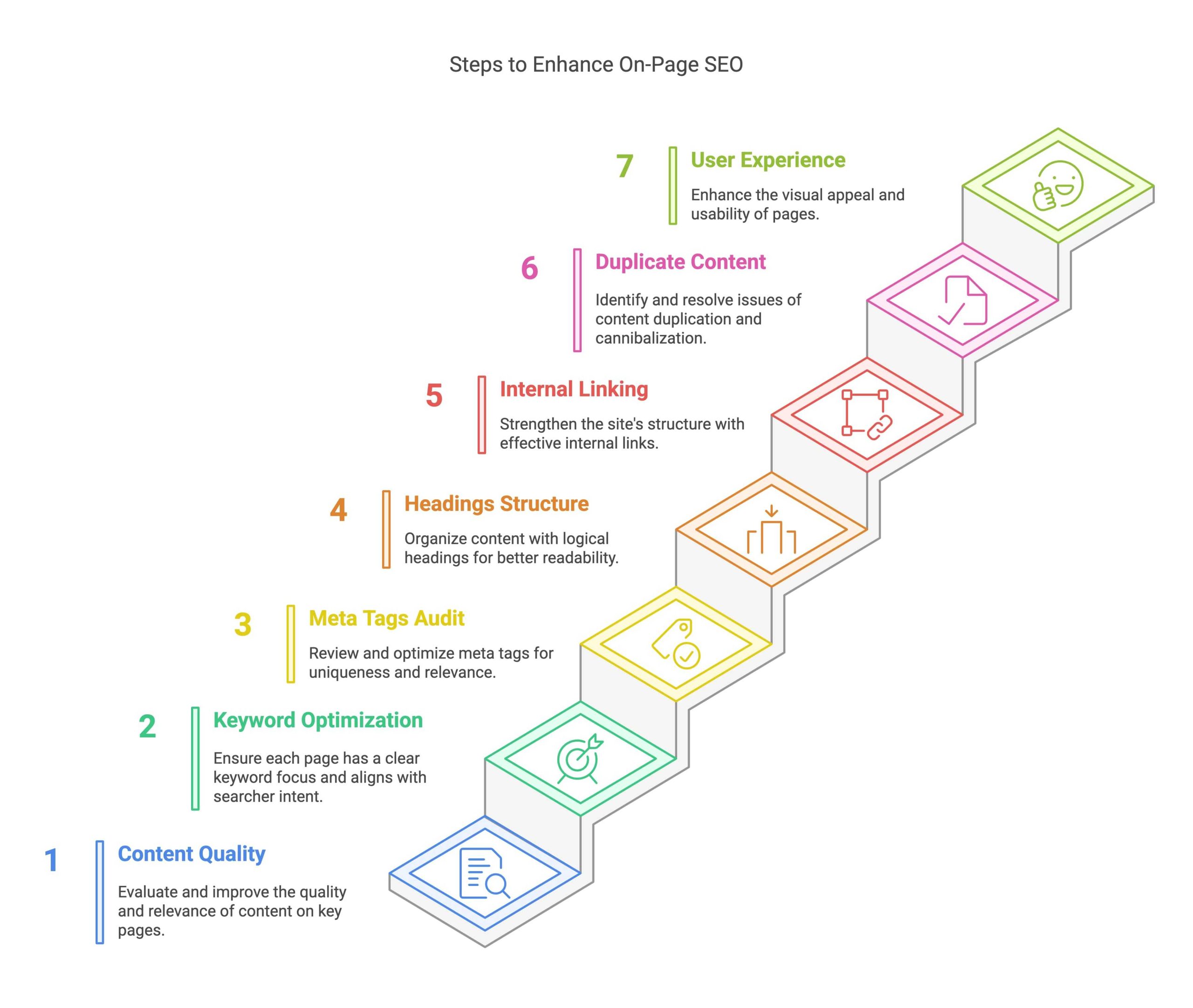
Start by thoroughly analyzing your current content, focusing on keywords, readability, and engagement metrics, then make data-driven adjustments to boost SEO. This process involves evaluating each piece for keyword optimization, user intent alignment, and technical issues, ensuring your content is primed to rank higher and attract more visitors.
To improve your existing content for SEO, conduct a detailed audit that covers keyword relevance, content quality, technical SEO, and user engagement. By identifying and fixing gaps, enhancing keywords, and updating outdated information, you can significantly improve your content’s search engine performance.
Auditing your existing content for SEO improvements is essential to stay competitive in today’s digital landscape. It involves reviewing your content’s structure, keywords, and technical components to identify areas that need optimization. This process helps ensure your content aligns with current best practices, meets user intent, and ranks higher in search engine results. Regular audits not only improve visibility but also enhance user experience, driving more traffic and engagement. Whether updating old posts or refining new ones, a systematic approach to content auditing can make a substantial difference in your SEO success.

How to audit existing content for SEO improvements
Auditing your existing content is essential for boosting your website’s visibility on search engines. It helps you find what’s working and what needs improvement. Regularly reviewing your content ensures your site remains relevant and competitive.
Understanding the purpose of an SEO content audit
An SEO content audit evaluates how well your website’s content performs in search results. It identifies strengths and gaps, guiding future content strategies. This process helps you improve rankings and attract more organic traffic.
A successful audit aligns your content with your business goals and target audience needs. It also ensures your site provides value and answers your visitors’ questions effectively.
Preparing for the content audit
Start by gathering all your existing content. Use tools like Google Analytics and Search Console to get preliminary data on performance. Organize your content into categories or topics for easier review.
Set clear objectives for your audit. Decide whether you want to improve rankings, increase traffic, or fix technical issues. This focus will keep your review targeted and efficient.
Collecting and analyzing data
Use SEO tools such as SEMrush, Ahrefs, or Moz to gather detailed insights into your content’s performance. Track key metrics including organic traffic, keyword rankings, bounce rate, and engagement levels.
Examine your top-performing pages to understand what drives their success. Also, identify underperforming content that may need updates or removal.
Assessing content quality and relevance
Evaluating content accuracy and originality
Ensure your content provides accurate, up-to-date information. Check for duplicated content or outdated facts that may harm your credibility.
Originality matters as well. Avoid copying competitors’ content and focus on adding unique perspectives or insights.
Checking keyword optimization
Review whether your content targets relevant keywords naturally within the text. Ensure primary and secondary keywords are integrated without keyword stuffing.
Utilize keyword research tools to find new opportunities and incorporate long-tail keywords for better targeting.
Technical SEO considerations
Analyzing page speed and mobile responsiveness
Use Google PageSpeed Insights or GTmetrix to evaluate load times. Faster pages improve user experience and search rankings.
Test your website on multiple devices to ensure it adapts seamlessly. Mobile friendliness is crucial for ranking well on smartphones.
Checking for broken links and errors
Broken links frustrate users and hurt your SEO. Use tools like Screaming Frog or Broken Link Checker to find and fix them.
Review your site’s 404 pages and redirect outdated URLs to relevant content.
Optimizing content for SEO
Improving on-page elements
Optimize titles, meta descriptions, headers, and images for keywords. Keep titles concise and engaging to improve click-through rates.
Use descriptive alt tags for images to enhance accessibility and boost image search rankings.
Enhancing user experience
Break long paragraphs into shorter ones for easier reading. Add bullet points or numbered lists to present information clearly.
Include internal links to related content to keep visitors engaged and improve site structure.
Revising and updating content
Refresh outdated information and add new insights. Update relevant data, statistics, and examples to maintain content relevance.
Rewrite content to improve clarity and engagement. Use a conversational tone to connect better with readers.
Removing or consolidating underperforming content
If certain pages consistently underperform despite updates, consider removing them. Alternatively, merge similar pages to create comprehensive resources.
Redirect old URLs to more valuable or updated content to preserve SEO value and improve user experience.
Implementing a content audit checklist
| Audit Step | Action | Tools Needed |
|---|---|---|
| Content Inventory | Gather all existing content and organize by topic or type | CMS, Excel, Google Sheets |
| Performance Analysis | Review key metrics and identify top and underperformers | Google Analytics, Search Console, SEO tools |
| Quality Assessment | Check for relevance, accuracy, and uniqueness | Manual review, plagiarism checkers |
| Technical Check | Identify crawl errors, speed issues, or mobile problems | Google PageSpeed, Screaming Frog |
| Optimization | Refine keywords, improve on-page SEO, fix errors | SEO plugin, Keyword research tools |
| Content Updates or Removal | Revise, update, or delete pages | Content management system |
Tracking and measuring improvements
After updates, monitor key performance indicators to gauge success. Use Google Analytics to observe changes in traffic and engagement.
Track keyword rankings over time to see if your efforts impact visibility. Regular audits ensure your content remains optimized and valuable.
Creating a regular audit schedule
Set a routine for audits, such as quarterly or biannual reviews. Consistency helps you stay ahead of SEO issues and adapt to algorithm changes.
Document your findings and improvements for future reference. This record keeps your SEO efforts organized and goal-oriented.
Auditing your content is a continuous process that keeps your website optimized for both users and search engines. Focus on quality, relevance, and technical health, and your content can attract more visitors and achieve your business goals.
The Best SEO Strategies for 2025
Frequently Asked Questions
What key metrics should I analyze during an SEO content audit?
Focus on metrics such as organic traffic, bounce rate, average session duration, and keyword rankings. These indicators reveal how well your content performs in attracting and engaging visitors. Additionally, assess bounce rates to identify pages that may need content improvements or clearer calls to action. Tracking keyword rankings helps you determine which pages are effectively optimized and where adjustments may be necessary.
How can I evaluate if my existing content aligns with current SEO best practices?
Review your content for proper keyword integration, including primary and secondary keywords naturally woven into the text. Check if each page has optimized meta titles and descriptions, header tags, and relevant internal links. Ensure your content provides value to users by addressing their questions thoroughly and keeps a clear focus on targeted topics. Regularly update your content to keep it relevant and accurate, aligning with evolving SEO standards.
What tools can assist in identifying content gaps for SEO improvement?
Use SEO tools like Ahrefs, SEMrush, or Moz to analyze your content and identify areas where competitors rank higher. These tools reveal keyword gaps and opportunities by comparing your content with top-performing pages in your niche. Additionally, employ site audit tools to detect technical issues, broken links, and duplicate content that might hinder your SEO efforts. Conducting keyword research helps uncover topics your audience actively searches for but are not yet covered on your site.
How do I measure the effectiveness of changes made after an SEO content review?
Track changes in key performance indicators such as organic traffic, page rankings, and conversions over time. Use analytics platforms like Google Analytics and Google Search Console to monitor traffic patterns, bounce rates, and click-through rates. Comparing pre- and post-optimization data helps you determine whether your modifications positively impact your content’s visibility and engagement. Regularly revisit your metrics to identify ongoing opportunities for improvement.
Final Thoughts
How to audit existing content for SEO improvements involves reviewing your current pages for keyword relevance, quality, and engagement. Check if your content aligns with target keywords and update outdated information. Analyze user engagement metrics like bounce rate and time on page to identify areas for enhancement.
Prioritize content with high potential and optimize metadata, headers, and internal links. Regular audits ensure your content remains competitive and relevant. Focusing on these steps keeps your website optimized and effective in search rankings.