
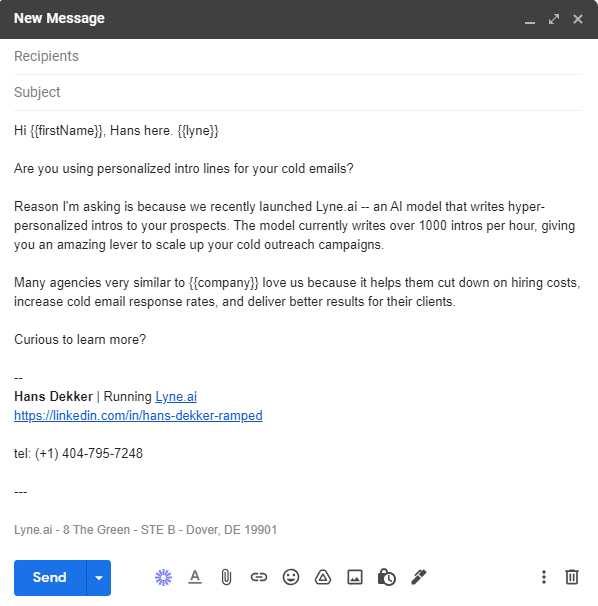
To greatly improve your cold email response rate, start by tailoring each message to the recipient’s interests and pain points. Use their name, reference recent achievements, or mention common connections to make your email feel personal and relevant. Keep your message concise, engaging, and focused on how you can provide value specifically for them. Personalization shows that you’ve invested time in understanding their needs, making it more likely they’ll respond positively.
In essence, personalizing cold emails involves doing research on your recipient, customizing your messaging accordingly, and emphasizing how your offer addresses their specific challenges. This approach transforms a generic outreach into a meaningful conversation starter, increasing the chances of building genuine connections and driving results.
Unlock the secret to better responses by making your emails feel less like mass marketing and more like a tailored message from one professional to another. When you focus on individual needs and demonstrate genuine interest, your cold emails become much more effective and likely to get noticed in a crowded inbox.

How to personalize cold emails for better response
Understanding the importance of personalization
Personalization enhances the chances that your cold email will be opened and read. When recipients see content tailored specifically to them, they feel valued. Personalized emails create a connection that generic messages simply cannot achieve. This makes it more likely they’ll respond positively.
Research your prospects thoroughly
Before writing your email, spend time learning about your potential customer or partner. Visit their website, social media profiles, and recent news articles. Gather information about their interests, challenges, and achievements. The more you know, the better you can craft a message that resonates with them.
Use the recipient’s name and details correctly
Start your email by addressing the recipient by their full name or preferred nickname. Double-check spellings to show respect and professionalism. Including specific details about their company or role demonstrates genuine interest and effort.
Personalize the subject line
The subject line is the first thing recipients see. Make it specific and relevant to their needs or interests. For instance, “Improving Your Social Media Strategy at [Company Name]” works better than a generic “Hello” or “Quick Question.” A compelling subject line encourages opens.
Mentioning mutual contacts or common interests can instantly build trust. For example, “I noticed we both attended the XYZ Conference,” or “Your recent article on sustainability caught my eye.” This creates a sense of familiarity and opens the door for conversation.
Tailor your message to address their pain points
Identify the challenges your prospect faces and explain how your offering can help. Use your research to highlight specific issues related to their industry or role. Focus on benefits rather than features, showing that you understand their situation.
Include personalized examples or references
Use real examples relevant to the recipient. For instance, mention a recent project, challenge, or success story from their company. This demonstrates that you’ve done your homework and aren’t sending a mass message.
Utilize dynamic content and variables
Employ email tools that allow you to insert personalized variables automatically. For example, software can replace placeholders with names, company names, or recent achievements. This saves time and maintains accuracy when sending multiple emails.
Best practices for personalizing cold emails
- Craft a compelling opening that connects quickly
- Keep the message concise and relevant
- Use a conversational tone to build rapport
- Avoid generic phrases and templates
- Test different personalization techniques to see what works
Develop a personalized value proposition
Clearly state how your product or service can address the prospect’s specific needs. Explain the unique benefits tailored to their situation. This makes your offer compelling and worth their time.
Share stories of similar clients who benefited from your service. Mention recognizable brands or partners to build credibility. Personalize this by referencing an example relevant to the recipient’s industry.
Add a clear and personalized call-to-action
Guide recipients towards the next step with an action that feels natural to them. Whether it’s scheduling a call, trying out a demo, or replying with questions, make it specific and easy to follow.
Use personalization in your email signature
Include personalized details like your contact information, social media profiles, or a relevant quote. This humanizes your message and encourages ongoing conversation.
Test and optimize your personalized emails
Track metrics such as open rates, click-through rates, and responses. Experiment with different personalization tactics to see what resonates best. Use A/B testing to refine your approach for better results.
Be mindful of over-personalization
While personalization improves response rates, too much can seem intrusive or insincere. Strike a balance by focusing on key details that add value without overwhelming the recipient. Always respect privacy and avoid overstepping boundaries.
Integrate storytelling into your outreach
Sharing a brief story relevant to your prospect can make your email memorable. For example, narrate how you helped a similar client overcome a challenge. Stories resonate emotionally and can increase engagement.
Stay authentic and genuine
Authenticity builds trust. Avoid overly scripted or salesy language. Write as if you’re having a real conversation. Genuine personalization shows you care about the recipient’s success.
Utilize automation wisely
Automation tools can help you personalize at scale, but avoid making messages sound robotic. Use personalization tokens and carefully review automated emails to ensure they maintain a natural tone.
Follow up with personalized messages
Don’t rely on a single email. Follow up with personalized messages that reference previous interactions or new insights. Persistence with a personal touch can significantly increase response rates.
- Effective email subject lines for better open rates
- The best tools for email personalization
- How to write compelling cold email copy
- Timing your emails for maximum impact
- Analyzing your cold email campaigns for continuous improvement
By meticulously personalizing each aspect of your cold emails, you build genuine connections that provoke interest and response. Remember, the goal is to make your recipient feel understood and valued, not just another name in a list. Applying these strategies consistently can lead to higher engagement, increased conversions, and stronger professional relationships.
How To Write Killer Cold Emails That GUARANTEE Responses (45.8% Reply Rate?!)
Frequently Asked Questions
How can I include personal details without making the email seem intrusive?
Incorporate relevant personal details that align with the recipient’s interests or recent achievements. Mentioning a recent company milestone or a common connection shows genuine interest and avoids overstepping boundaries. Keep the tone friendly and focused on how your offering relates to their needs, which makes the email feel personalized rather than invasive.
What are some effective ways to reference a recipient’s work or background?
Research the recipient’s recent projects, blog posts, or social media activity to gather specific insights. Mention these details explicitly in your email, such as complimenting a recent campaign or commenting on their expertise. This demonstrates your attentiveness and encourages a more engaged response, making your outreach feel tailored specifically to them.
How can I adapt my language to resonate more with the recipient?
Use language that matches the recipient’s industry jargon and communication style. Scan their website or recent publications to identify keywords and phrases they frequently use. Incorporate these into your message to show alignment and understanding of their world, which helps foster a connection and increases the chances of engagement.
What role does timing play in personalizing outreach emails?
Timing your email to coincide with relevant events or milestones can make your message more pertinent. For instance, reaching out shortly after a company announcement or industry event shows your awareness of their current situation. Sending the email at a time when the recipient is more likely to read and respond enhances personalization and improves response rates.
How can I customize my call-to-action to match the recipient’s interests?
Frame your call-to-action around the recipient’s goals or challenges. Instead of generic requests, suggest specific ways your solution can address their needs or invite them to a relevant resource or event. Personalizing the CTA makes it more compelling and aligned with their priorities, encouraging them to take the next step.
Final Thoughts
How to personalize cold emails for better response emphasizes the importance of tailored messaging. Use recipient-specific details like their name, company, or recent achievements to create relevance. Incorporate insights into their interests or challenges to show genuine engagement.
By emphasizing personalization, you foster trust and make your emails stand out in crowded inboxes. Ultimately, applying these strategies can significantly improve your outreach success. Remember, the key is to make each email feel like a conversation, not a generic pitch. Personalization is essential for better response.
Recommended Email Marketing


