
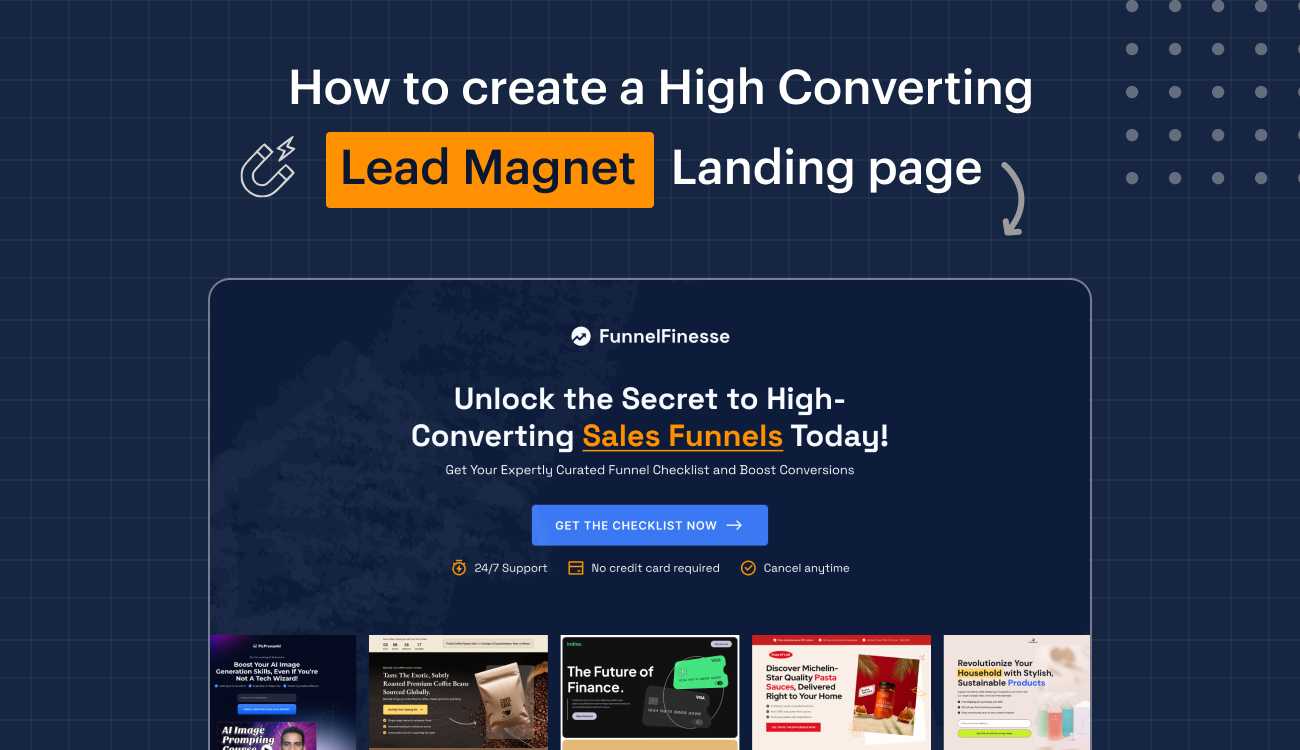
To create effective landing pages for lead magnets, start by crafting a clear and compelling headline that immediately grabs attention. Keep your design simple and focused, highlighting the value of your offer with persuasive copy and eye-catching visuals. Use a straightforward form to collect visitor information without overwhelming them, and include a strong call-to-action that motivates users to take the next step. Testing different elements and analyzing performance will help optimize your page for better conversions.
Creating landing pages for lead magnets is all about designing a seamless experience that entices visitors to share their contact details in exchange for valuable content. By focusing on clarity, persuasive messaging, and a clean layout, you can effectively convert visitors into leads. Whether you’re offering an ebook, webinar, or free trial, a well-crafted landing page acts as a powerful tool to grow your email list and boost your marketing efforts.
When it comes to building a landing page for your lead magnet, the key is to make it as appealing and straightforward as possible. It should clearly communicate what visitors will gain, eliminate distractions, and guide them effortlessly toward subscribing or downloading. Starting with a strong headline, emphasizing benefits, and including a simple form are essential steps to ensure your page converts visitors into engaged leads.

How to Create Landing Pages for Lead Magnets
Understanding the Importance of a Well-Designed Landing Page
Creating a landing page for your lead magnet is vital because it is often the first impression potential customers get. A compelling landing page can turn visitors into subscribers or customers. It acts as a dedicated space to showcase your offer and encourage users to take action quickly.
A good landing page focuses on clear messaging and simple design. It reduces distractions and guides visitors towards a specific goal. To make your landing page effective, you need to understand your audience and what motivates them to opt in.
Key Elements of an Effective Landing Page
Every successful landing page includes essential components that work together to convert visitors. Here are the main elements:
- Headline: Grabs attention and clearly states the benefit of your lead magnet.
- Subheadline: Provides additional information and supports the headline.
- Description of the Lead Magnet: Explains what the visitor will receive and how it helps them.
- Call to Action (CTA): Encourages visitors to take the next step, such as clicking a button to download or sign up.
- Visuals: Includes relevant and appealing images or videos to capture interest.
- Form: Asks for essential information like name and email address, keeping it simple.
- Social Proof: Testimonials or trust badges that boost credibility.
Design should be clean with plenty of white space, easy-to-read fonts, and contrasting colors for buttons and headlines. Keep the layout focused on one goal—getting visitors to convert.
Creating a Magnetic Headline
The headline is the first thing visitors see, so it needs to be clear and enticing. Use powerful words that highlight the value of your lead magnet. For example, instead of “Free Ebook,” say “Boost Your Skills with Our Free Guide.”
Place the headline prominently at the top of the page to ensure it captures attention immediately. Test different headlines to see which resonates best with your audience.
Writing a Persuasive Subheadline
The subheadline complements the main headline by adding more context. It should reinforce the promise and make visitors eager to learn more. Keep it concise and focused on the main benefit.
For example, if your lead magnet is a cheat sheet, your subheadline could be “Quick Tips to Save Time and Increase Productivity.”
Describing Your Lead Magnet Clearly
Explain what visitors will get and how it will help them. Use simple language and focus on the benefits instead of just features. Bullet points work well to list what the lead magnet includes.
Make sure this section aligns with your visitors’ needs and pains. The more relevant it feels, the more likely they are to convert.
Designing Engaging Visuals
Images should be high-quality and relevant to your offer. Visuals can include mock-ups of your lead magnet or happy users. Videos can increase engagement if they quickly show how the lead magnet solves a problem.
Avoid cluttering the page with too many visuals. Keep a balance that guides users’ eyes toward your CTA.
Optimizing Your Call to Action
Your CTA is the most important part of the landing page. Use words that create urgency and clarity, such as “Download Now,” “Get Your Free Copy,” or “Claim Your Spot.”
Make the CTA button stand out with a contrasting color and large size. Position it above the fold and repeat it at the bottom for easy access.
Designing a Simple and User-Friendly Form
Keep form fields to a minimum to reduce friction. Usually, asking for a name and email address suffices. Use clear labels and placeholder text to guide visitors.
Ensure your form works seamlessly on all devices and loads quickly. Consider integrating auto-responders to automatically deliver the lead magnet after sign-up.
Adding testimonials, reviews, or trust badges can reassure visitors about the quality of your offer. Display any relevant certifications or security icons to boost credibility.
Social proof creates a positive impression and can convince undecided visitors to convert.
Implementing SEO Strategies for Your Landing Page
Optimizing your landing page for search engines helps attract organic traffic. Use relevant keywords naturally within the headline, subheadline, and content. Include keywords like “lead magnet,” “free download,” and specific descriptions of your offer.
Add meta descriptions, alt text for images, and proper header tags to improve SEO. Link your landing page internally to other relevant pages on your website.
Testing and Improving Your Landing Page
A/B testing different headlines, images, or CTAs can help identify what works best. Use analytics tools to track conversion rates and visitor behavior.
Regularly update your landing page based on data. Experiment with layout changes, new visuals, or different offers to maximize performance.
Using Tools and Platforms to Create Landing Pages
Several tools make building professional landing pages easy and quick. Popular options include:
- Leadpages
- Unbounce
- Instapage
- ClickFunnels
- Mailchimp Landing Pages
These platforms offer customizable templates, drag-and-drop editors, and integrated analytics. Choose the one that fits your budget and requirements.
Integrating Your Landing Page with Marketing Automation
Connect your landing page to email marketing platforms like Mailchimp, ConvertKit, or ActiveCampaign. This allows automatic delivery of your lead magnet after sign-up.
Automation simplifies follow-up sequences and nurtures your leads effectively. It also helps you segment your audience based on their interactions.
Ensuring Mobile Responsiveness
Most visitors will access your landing page via smartphones or tablets. Ensure your design is mobile-friendly, with responsive layouts and easy-to-tap buttons.
Test your landing page on different devices and screen sizes. This guarantees a seamless experience and improves conversion rates.
Adopting Best Practices for High Conversion Rates
To boost conversions, maintain a clear focus on the visitor’s needs. Use compelling copy, eye-catching visuals, and clear calls to action. Limit distractions and remove unnecessary information.
Use scarcity or urgency when appropriate, like “Limited Time Offer” or “Download Before It’s Gone.” Regularly refine your landing page based on performance metrics.
Creating an effective landing page for your lead magnet involves focusing on clarity, simplicity, and persuasion. Use engaging headlines, persuasive descriptions, high-quality visuals, and strategic placement of your CTA. Regular testing and optimization ensure your landing page continues to perform well. By following these detailed steps, you can turn visitors into loyal subscribers ready to engage with your brand.
Lead Magnet Landing Page (Free Landing Page For Affiliate Marketing)
Frequently Asked Questions
What are the essential elements to include on a lead magnet landing page?
A successful landing page should clearly communicate the value of your offer, featuring a compelling headline, a concise description of the lead magnet, and an eye-catching call-to-action button. Incorporate visuals that support your message and add trust signals like testimonials or security badges to reassure visitors. Keep the layout clean and focused to guide visitors smoothly toward signing up.
How can I design a landing page that encourages visitors to submit their information?
Design your landing page with simplicity in mind. Use minimal form fields—asking only for necessary information—and position the form above the fold so visitors see it immediately. Use contrasting colors for your call-to-action button to draw attention, and craft persuasive copy that emphasizes the benefits of your lead magnet to motivate visitors to act.
What strategies can I use to test and improve my landing pages for better conversion rates?
Implement A/B testing by creating variations of your landing page, altering elements such as headlines, images, or call-to-action buttons. Analyze the performance data to identify which versions perform best. Continuously optimize your pages based on these insights, and consider user feedback to fine-tune your messaging and design for increased engagement.
How important is mobile optimization when creating landing pages for lead magnets?
Mobile optimization plays a crucial role in the success of your landing pages. With many users browsing on smartphones and tablets, ensure your pages load quickly and display correctly across devices. Use responsive design techniques so that all elements, including forms and call-to-action buttons, are easily accessible and functional, encouraging conversions regardless of device.
What tools or platforms can assist in building effective landing pages for lead magnets?
Several user-friendly platforms can help you create attractive and functional landing pages without extensive coding knowledge. Options like Unbounce, Leadpages, Instapage, and HubSpot offer customizable templates, integrations, and analytics tools. These platforms enable you to design, publish, and analyze your landing pages efficiently, supporting your lead generation efforts.
Final Thoughts
Creating effective landing pages for lead magnets involves clear messaging and a compelling call-to-action. Use a clean design that guides visitors toward the form without distractions. Highlight the value of your offer to motivate sign-ups.
Focus on concise copy and persuasive visuals to capture attention quickly. Test different layouts and headlines to see what resonates best with your audience.
In conclusion, how to create landing pages for lead magnets depends on clarity, design, and compelling content. Applying these principles increases conversions and builds your contact list efficiently.